
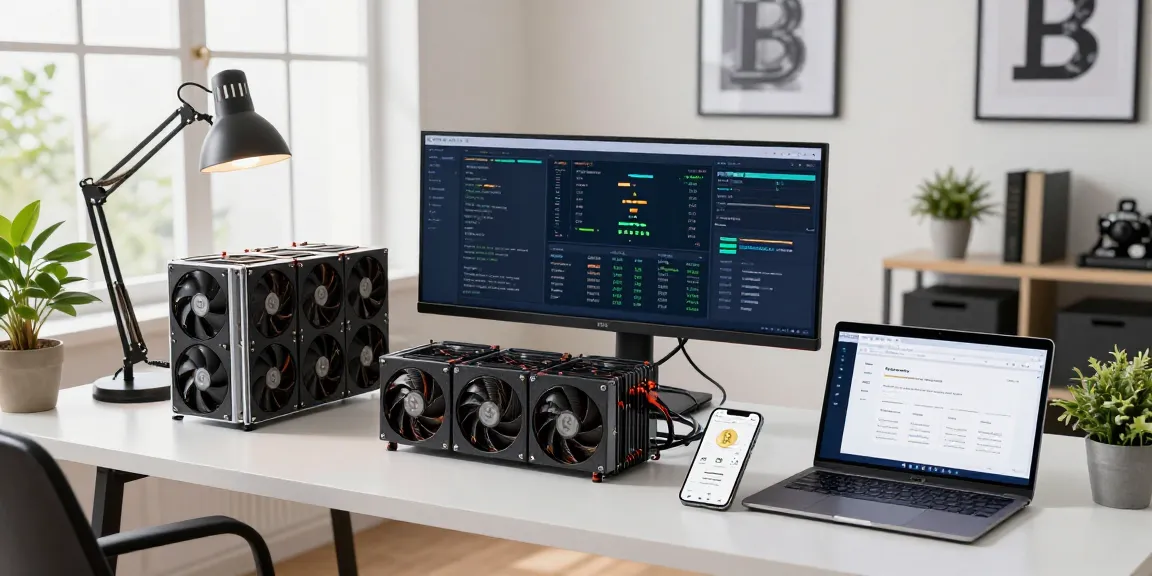
- Understanding Bitcoin Mining: Basics and Beyond
- Evaluating Bitcoin Mining Companies: Key Considerations
- The Technology Behind Bitcoin Mining Operations
- Financial Aspects of Bitcoin Mining Investments
- Security Best Practices in Bitcoin Mining
- DeFi & Advanced Topics
- Regulatory & Legal Compliance
- Security Threats & Risk Management
- Content Quality & Depth
Understanding Bitcoin Mining: Basics and Beyond
As the world continues to embrace digital transformation, Bitcoin mining stands at the forefront of blockchain innovation. This intricate process not only underpins the security of the Bitcoin network but also functions as a catalyst for the development of decentralized applications and financial systems. With its reliance on distributed ledger technology (DLT), Bitcoin mining exemplifies the potential of blockchain to revolutionize how we perceive and interact with currencies and financial transactions. In this guide, we will explore the essentials of Bitcoin mining, the role of mining companies, and the multifaceted technology that drives this crucial aspect of the cryptocurrency ecosystem. When exploring options, bitcoin mining company resources provide comprehensive insights into the operational landscape.
What is Bitcoin Mining and How Does It Work?
Bitcoin mining is the process by which new bitcoins are created and transactions are securely verified on the network. This process involves miners competing to solve complex mathematical puzzles, a mechanism known as proof-of-work (PoW). When a miner successfully solves the puzzle, they create a new block that contains transaction data. This block is then added to the blockchain, and the miner is rewarded with newly minted bitcoins, alongside transaction fees from the transactions included in the block.
The Role of Miners in Blockchain Technology
Miners play a critical role in maintaining the integrity and security of the Bitcoin network. By validating transactions and adding them to the blockchain, they ensure that the decentralized network remains resilient against fraud and tampering. Additionally, miners help to secure the Bitcoin ecosystem’s decentralized nature, preventing any single party from exerting excessive control over the network.
Types of Bitcoin Mining: Solo vs Pool Mining
There are primarily two types of Bitcoin mining: solo mining and pool mining. Solo mining involves independent miners using their own hardware to mine Bitcoin, allowing them to retain the entire reward for successfully mining a block. However, due to increased difficulty levels and competition, solo mining has become less feasible for most individuals. On the other hand, pool mining aggregates the computing power of multiple miners, reducing the chances of losing out on rewards and allowing for more consistent payouts based on the contribution to the mining effort.
Evaluating Bitcoin Mining Companies: Key Considerations
Choosing the right Bitcoin mining company entails evaluating several key factors. The selection of a mining company can significantly affect your potential earnings and operational efficiency. Hence, a thorough assessment of available options is paramount.
Criteria for Choosing a Bitcoin Mining Company
When selecting a Bitcoin mining company, consider factors such as the company’s track record, the efficiency of their mining hardware, and operational transparency. An effective mining operation should also have adequate liquidity management practices and robust customer support services. Furthermore, environmental sustainability is becoming increasingly important as miners face pressure to reduce their carbon footprints.
Assessing Security Measures and Trustworthiness
Security is paramount in the cryptocurrency world. It is essential to evaluate the security measures implemented by a mining company to protect user assets and data. Look for platforms that use advanced encryption techniques, regular security audits, and transparent operational practices. Corporate governance and compliance with regulatory standards are also critical indicators of trustworthiness.
Market Comparisons: Analyzing Leading Bitcoin Mining Companies
Analyzing leading Bitcoin mining companies involves studying their market positions, technology adoption, and profitability models. Leading firms often publish transparent reports detailing their operations, assets, and performance. Examples of prominent mining companies include Marathon Digital Holdings, Riot Platforms, and Bitmain. Understanding their business models and market strategies can inform your choices when considering a mining operation.
The Technology Behind Bitcoin Mining Operations
The efficiency and success of Bitcoin mining are heavily dependent on the technology employed in mining operations. From hardware choices to software solutions, each aspect plays a role in optimizing performance.
Mining Hardware: Choosing the Right Equipment
Choosing the right mining hardware is crucial for efficiency and profitability. Miners often use Application-Specific Integrated Circuits (ASICs) designed exclusively for Bitcoin mining, as they offer higher performance than traditional CPUs or GPUs. Evaluating factors such as hashing power, energy consumption, and cost is essential when selecting equipment.
Understanding Power Consumption and Costs
Mining operations can be power-intensive, with energy costs significantly impacting profitability. It is essential to assess power sources, rates, and the overall energy efficiency of mining rigs. Some miners are now seeking sustainable energy solutions, such as solar or hydroelectric power, to mitigate costs and address environmental concerns.
Software Solutions for Efficient Mining Management
Mining software plays a crucial role in managing mining operations. Solutions that include monitoring tools, benchmarking applications, and automated management platforms can help optimize mining performance and simplify transaction management. Additionally, these software packages can facilitate the integration of pools and distribution of rewards.
Financial Aspects of Bitcoin Mining Investments
Investing in Bitcoin mining can be lucrative, but it also involves considerable risk. Understanding the financial aspects is vital for prospective miners.
Startup Costs and ROI Analysis for Miners
Startup costs for Bitcoin mining can vary significantly based on the scale of the operation. Consider costs associated with hardware, software, electricity, and facility maintenance when calculating return on investment (ROI). Continuous evaluation of market trends and mining difficulty levels is essential for future profitability assessments.
Tax Implications for Bitcoin Miners in 2026
Tax obligations for Bitcoin miners differ based on jurisdiction but commonly include taxation on mining rewards as ordinary income. As regulations evolve, understanding tax implications—such as capital gains tax and reporting requirements—will be essential for compliance in 2026 and beyond.
Market Trends Impacting Bitcoin Mining Profitability
Market dynamics such as Bitcoin’s price fluctuations, mining difficulty adjustments, and regulatory changes can significantly affect the profitability of mining operations. Staying informed about technological advancements and competitor strategies can provide miners with a competitive edge amidst rapid changes in the crypto landscape.
Security Best Practices in Bitcoin Mining
Given the prevalence of security risks in the cryptocurrency domain, it is crucial for miners to adopt robust security practices to protect their investments and operations.
Protecting Your Mining Equipment from Threats
Miners must implement physical and digital security measures to safeguard their mining equipment. This can include securing facilities, using surveillance systems, and ensuring robust cybersecurity measures to thwart hacking attempts or physical theft.
Secure Wallet Management for Miners
Effective wallet management is essential for protecting mined Bitcoin. Miners should prefer hardware wallets over software wallets for greater security, ensuring private keys are stored offline. Additionally, employing multi-signature wallets can enhance transaction security.
Avoiding Scams in the Mining Industry
While Bitcoin mining offers significant opportunities, it also carries risks of scams and fraudulent activities. New miners should be educated on how to recognize red flags, such as unrealistic promises of returns, unverified platforms, and poorly elaborated business models. Conducting thorough due diligence is imperative.
What Should New Miners Consider?
New miners should consider factors such as initial investment, local regulations, cloud mining alternatives, and suitable mining pools before entering the market. Understanding the technical aspects of mining hardware and the broader market landscape will provide a solid foundation for their ventures.
DeFi & Advanced Topics
Decentralized Finance (DeFi) is reshaping the financial landscape, and its connections to Bitcoin mining make it an essential area of exploration.
Explain DeFi Protocols and Mechanisms
DeFi protocols revolutionize traditional finance by enabling peer-to-peer transactions without intermediaries. Concepts such as automated market makers (AMMs), liquidity pools, and yield farming enhance the efficiency and profitability of digital assets. Miners can benefit from participating in DeFi platforms that incentivize liquidity provision in various forms.
Discuss Smart Contracts and dApp Development
Smart contracts are integral to the execution of decentralized applications (dApps). Miners who understand the Ethereum Virtual Machine (EVM) and the Solidity programming language can also explore opportunities in creating or auditing smart contracts. Proper audit practices are vital to ensure the integrity and security of these applications.
Cover Layer-2 Scaling Solutions
Layer-2 scaling solutions, such as Rollups and sidechains, aim to address the scalability issues faced by major blockchains. Miners can benefit from integrating these technologies to lower gas fees and improve transaction throughput, thereby increasing the overall effectiveness of their mining operations.
Regulatory & Legal Compliance
As crypto mining continues to grow, the need for regulatory compliance becomes increasingly paramount. Miners must navigate the complex landscape of laws governing their activities.
Overview of the 2026 Regulatory Landscape
The regulatory framework surrounding cryptocurrency is evolving. Key bodies such as the Securities and Exchange Commission (SEC) and the Commodity Futures Trading Commission (CFTC) are shaping policies that impact mining operations. Keeping abreast of new regulations and adhering to Anti-Money Laundering (AML) and Know Your Customer (KYC) regulations is crucial for legitimate mining operations.
Addressing Legal Considerations
Understanding the distinctions between securities and utility tokens is vital for miners looking to explore token issuance. Compliance with local and international laws regarding cross-border transactions, accredited investor requirements, and securities classifications is critical to avoid legal repercussions.
Security Threats & Risk Management
Awareness of security threats is essential for anyone involved in Bitcoin mining. Implementing risk management strategies can mitigate potential consequences.
Common Security Threats
- Phishing attacks and fake websites targeting miners
- Sim-swap attacks leading to account takeovers
- Malware and keyloggers designed to steal private information
- Fake Initial Coin Offerings (ICOs) and rug pulls
- Exit scams and Ponzi schemes
- 51% attacks threatening smaller blockchains
Provide Risk Mitigation Strategies
Miners can protect their investments through due diligence practices, which include checking the reputation of mining pools and platforms, verifying smart contract audits, and maintaining a gradual investment approach. Developing emergency exit strategies can also shield investors from unforeseen market downturns.
Content Quality & Depth
The cryptocurrency and blockchain landscape is complex and multifaceted. Therefore, providing technically accurate and clear information is crucial for educating miners and investors alike.
By balancing technical depth with accessibility, aspiring miners can better understand the nuances of the cryptocurrency ecosystem. This involves exploring different strategies, analyzing market trends, and emphasizing a thorough research-driven approach.
In conclusion, as Bitcoin mining continues to evolve, staying informed about technological advancements, market dynamics, and regulatory changes will empower miners to navigate this rapidly changing landscape effectively. By focusing on security, understanding the operational intricacies, and engaging in best practices, both new and seasoned miners can optimize their Bitcoin mining ventures.